How AI Call Evaluation Improves Sales Team Performance
By Track Agent · Published · Updated

A sales team can finish the week with plenty of calls and little explanation for why qualified prospects stopped progressing. AI call evaluation helps investigate that gap by connecting what happened in a conversation to a defined quality standard and a recorded next step.
The useful output is a coaching or process decision supported by evidence. A higher score alone does not demonstrate better selling. For BPOs, the analysis also needs the right client, campaign and lead context; combining unrelated accounts can hide the cause of a problem.
Start With the Sales Outcome You Can Verify
Define the job of the call before scoring it. An inbound qualification call might establish fit and book a meeting. A human account executive's later call might clarify terms or advance a proposal. These calls should not share an unexplained conversion target.
Keep the outcome stages separate:
- A next step was discussed in the conversation.
- The customer agreed to that next step.
- A booking or CRM update was confirmed by the connected system.
- The meeting happened or the opportunity advanced later.
- A deal was won, lost or remained open within the reporting window.
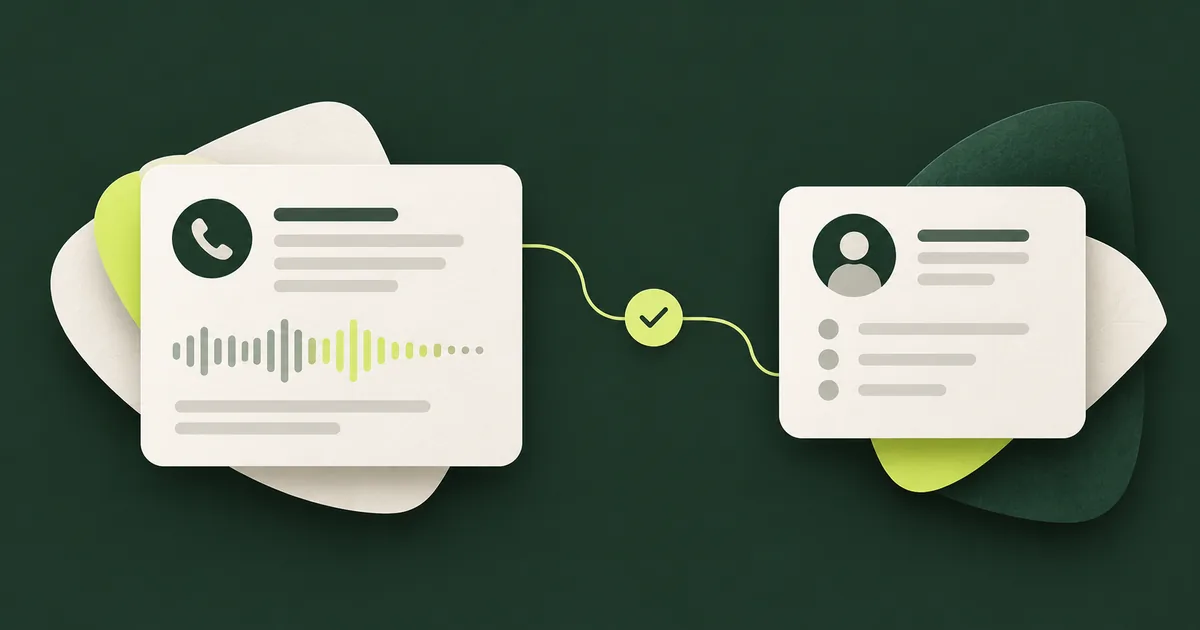
A transcript can support the first two stages. The others require business records. See the practical approach to connecting calls with CRM data.
Find a Coachable Gap, Not Just a Low Score
Review calls with a clear question: are prospects being disqualified correctly, are product answers accurate, or are agreed next steps being lost? Break the score into observable behaviors, then open the evidence behind recurring failures.
For example, “poor discovery” is too broad to coach. “The customer described a scheduling problem, but the rep never checked the number of locations affected” gives a reviewer something to verify and a rep something to practice. This is a hypothetical example, not a measured customer result.
Check the recording where permitted if the wording or speaker attribution is uncertain. A missing transcript segment should become an unresolved assessment, not an automatic failure by the rep.
Separate Human Coaching From AI-Agent Changes
Human sales agents can practice a question sequence, review approved examples and discuss why a call took an unexpected direction. Give them a chance to correct the record before turning a model's interpretation into feedback.
An AI qualification agent needs a different response. If it skips a fit question, inspect its instructions and workflow. If it promises an unavailable meeting time, inspect the booking result and the rule for reporting success. An instruction change should pass test calls and approval before release. It is not equivalent to asking a person to improve their listening.
Track these two improvement paths separately while using shared criteria for truthful answers, appropriate permissions and verified outcomes. Our AI calling workflow and call QA overview describe the two areas.
Run a Measurable Pilot
Choose one campaign, one call type and a scorecard your reviewers can explain. Establish a baseline for both business outcomes and the work needed to review calls.
- Select representative calls, including unsuccessful calls and incomplete evidence.
- Have reviewers apply the same rubric independently, then resolve disagreements.
- Compare automated findings with that reviewed set at the individual-criterion level.
- Choose one coaching or workflow change with a named owner.
- Compare later results using the same outcome definition and enough time for deals to mature.
If lead sources, pricing or staffing change during the pilot, record that. A better close rate may reflect the new lead mix rather than the coaching. Use a comparable group or a controlled rollout where practical, and report the uncertainty instead of assigning the whole improvement to AI.
Measure the Work Around the Score
Track review time, disputed findings, missed critical issues, coaching completion and outcome progression. Measure how many eligible calls could actually be assessed. A dashboard showing only successful evaluations can make the program appear healthier than it is.
Keep critical failures visible even when the average score is high. Accurate discovery cannot offset an unauthorized promise. The sales call scoring guide explains how to separate those decisions.
Bring One Workflow to the Evaluation
Prepare a sample rubric, approved product answers and a definition of a successful handoff or meeting. Use those to discuss the sales calling workflow, including which connected systems and actions need to be demonstrated. Confirm the actual scope before relying on any integration or automated action.
Frequently Asked Questions
Does AI call evaluation guarantee more sales?
No. It can help organize evidence and identify changes worth testing. The result depends on execution, demand, lead quality and the sales process as well as call quality.
Can human reps and AI callers share a scorecard?
They can share some standards, such as accurate answers and confirmed next steps. Keep actor-specific criteria and report comparable call types together.