Real-Time vs Post-Call Analysis: Which Does Your Team Need?
By Track Agent · Published · Updated
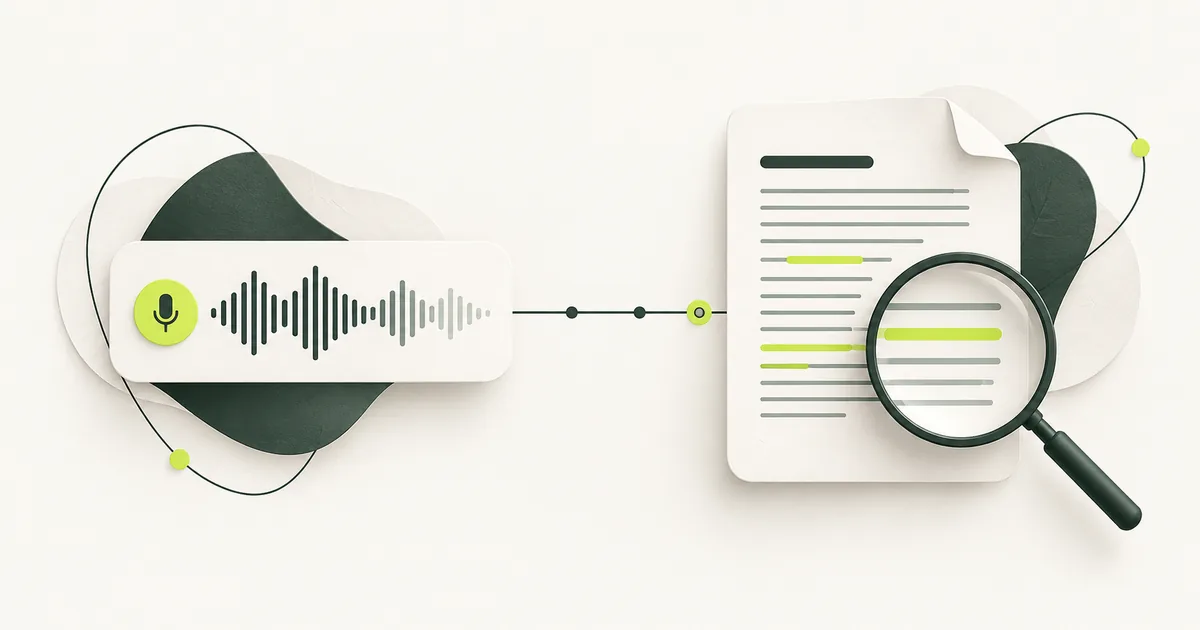
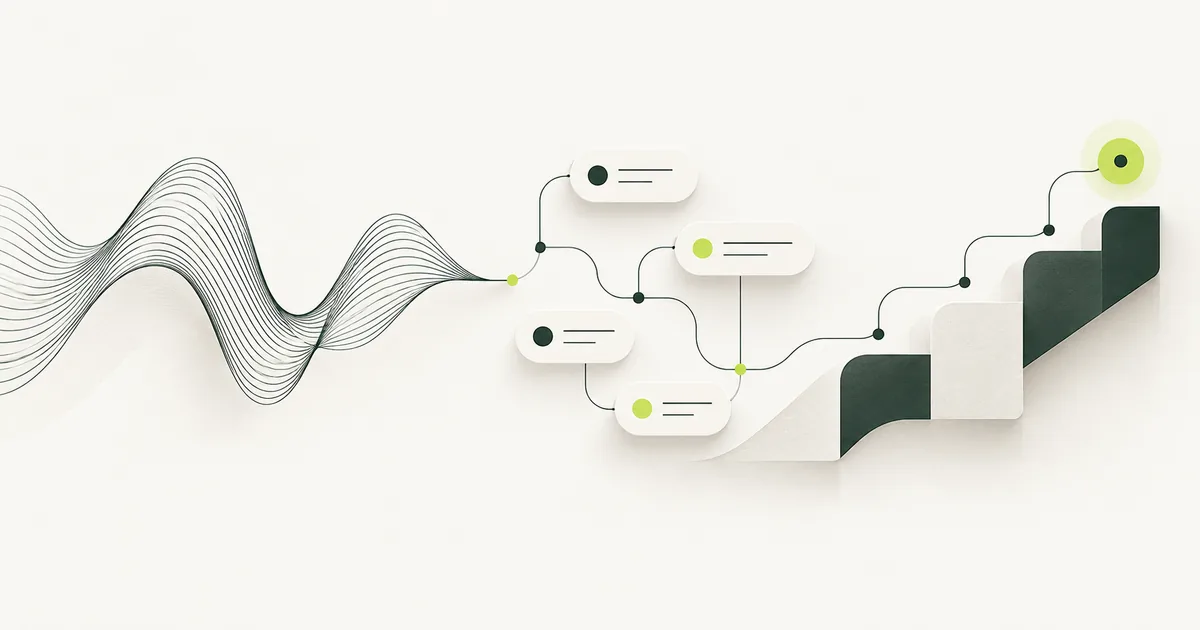
Real-time analysis and post-call analysis answer different operational questions. Live analysis asks whether a useful intervention can happen before the conversation moves on. Post-call analysis asks what the completed evidence says and what should change next.
For a sales or support team, the right choice depends on the failure you are trying to prevent. You do not need both simply because a vendor bundles them together.
Compare the Decision Each Approach Supports
| Dimension | Real-time analysis | Post-call analysis |
|---|---|---|
| Evidence available | The conversation so far; streaming text may change | More complete transcript and action records, where available |
| Immediate use | A prompt or workflow decision during the call | Review, coaching, reporting or a proposed change |
| Timing risk | Guidance can arrive too late or distract the agent | The original mistake has already happened |
| Validation need | Relevance, correctness and end-to-end delay | Evidence accuracy, rubric quality and reviewer agreement |
| Operational work | Streaming reliability, prompt design and live fallback | Ingestion, reconciliation, review queues and follow-up |
Neither approach guarantees that every call is assessable. Missing audio, unsupported language or a failed integration can affect both.
Distinguish Live Assistance From an AI Caller
A live human-assist tool sends suggestions to a person. An AI calling agent is the participant handling the conversation and permitted actions. Both respond during the call, but their users, failure modes and controls differ.
For example, a human rep can choose to ignore an irrelevant cue. An AI caller needs explicit rules for uncertainty, action permissions and handoff. Its response also needs evaluation after the call, including whether the action it described actually completed.
TrackAgent's AI voice agent workflow and post-call QA approach should be evaluated as distinct parts of that process. They do not imply a live coaching overlay for human reps.
Use Live Analysis When Timing Changes the Outcome
Consider a required verification step before an account change. Detecting the omission after the call helps investigate it, but cannot undo the original disclosure or action. The workflow needs a control before the action proceeds.
Some situations can use a human prompt; others need enforcement by the service performing the action. Do not use a reminder as a substitute for a permission check. Define the fallback when transcription, retrieval or the live connection fails.
For less urgent issues, weigh the value of intervention against interruption. A detailed critique of discovery technique may be more useful after the call than while the customer is explaining their problem. The live-coaching buyer's guide provides a pilot checklist.
Use Post-Call Analysis When Context Matters More
After the call, a reviewer can inspect the complete exchange, compare it with the applicable policy and reconcile connected-system results. That makes post-call review suitable for evaluating a difficult answer, a disputed score or a repeated workflow problem.
It is also useful for patterns across calls. If the same support request repeatedly ends in a failed handoff, the fix may involve routing or staffing rather than the sentence an agent used. Group by client, call type and system version before drawing a conclusion.
Post-call does not have to mean a weekly delay. Decide which findings require prompt review and which belong in scheduled coaching. Processing speed and review capacity are different constraints.
Compare Total Operating Cost
Include more than software or model usage. A live system needs prompt maintenance, streaming support and a way for agents to flag poor guidance. A post-call system needs evidence storage, calibration, exception review and ownership of follow-up tasks.
Measure the work created as well as the work avoided. If a system produces many low-value alerts, reviewer time may rise even though scoring is automated. Use call evaluation metrics that connect workload to verified outcomes.
Make the Choice With a Small Trial
Write down one failure, when it becomes costly, and what evidence is available before that point. If a permitted intervention can prevent it, test the live workflow. If the main benefit comes from understanding patterns or improving future behavior, begin with post-call QA.
Run the same representative scenarios through the proposed approach. Include interruptions, missing data, refusal and tool failure. Keep the evaluation criteria fixed so a change in the score does not merely reflect a change in the rules.
Frequently Asked Questions
Is post-call analysis enough for compliance?
It can support review and improvement. Requirements that must be satisfied before an action need appropriate controls at that earlier point; a later score cannot substitute for them.
Should we buy both at once?
Only if each has a defined job and a measurable benefit in your workflow. Establish evidence quality and operating ownership before broadening the scope.