AI Call Scoring: Consistency, Bias and Human Review
By Track Agent · Published · Updated
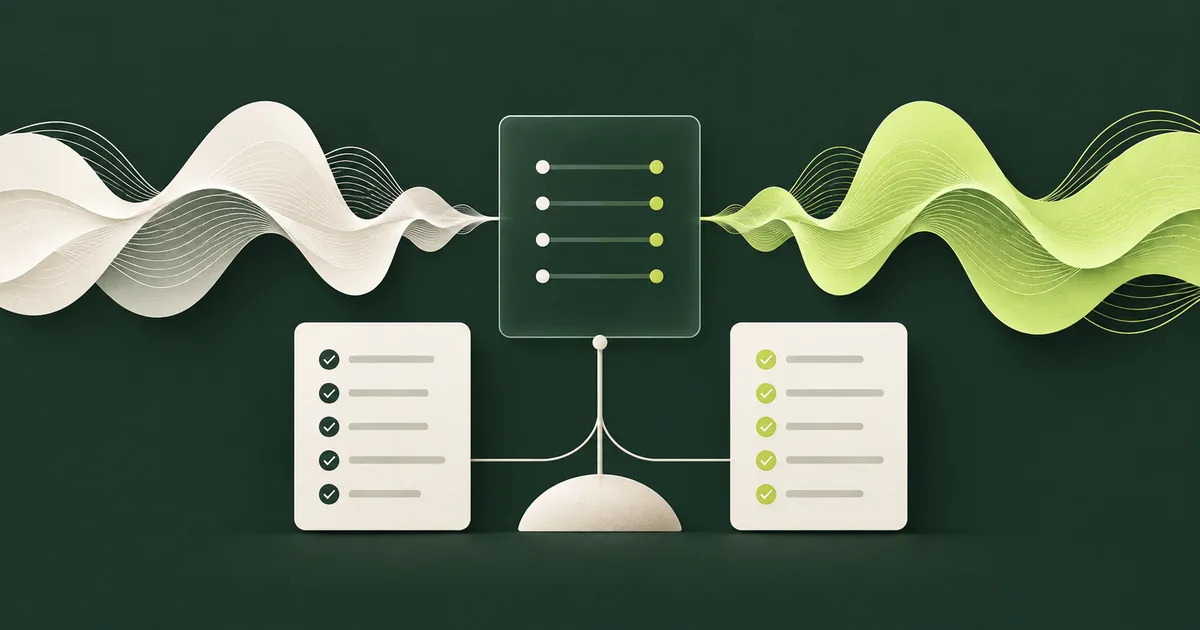
Two reviewers can disagree about the same sales call. Applying an AI rubric can make the review process more structured, but it does not make the judgment automatically fair or correct. AI call scoring without human bias is an appealing promise; a defensible QA program needs a way to test it.
For a BPO managing several clients, the question is practical: can a reviewer explain the result, identify the evidence and correct an error without losing the original record?
Consistency and Fairness Are Different Tests
A repeatable score can still be wrong. A rubric that penalizes every long pause might consistently mark down calls where an agent is waiting for a slow customer system. The scoring rule needs context, not just more consistent enforcement.
NIST's AI Risk Management Framework FAQs treat harmful bias as a risk to manage within trustworthy AI. They do not present automation as a guarantee of fairness.
Separate four questions when evaluating a scoring system:
| Question | What to inspect |
|---|---|
| Is it repeatable? | Whether the same evidence and configuration produce stable findings |
| Is it accurate? | Agreement with a carefully reviewed reference set, criterion by criterion |
| Is the rubric appropriate? | Whether the rule measures behavior relevant to this campaign and role |
| Is it fair in use? | Whether avoidable errors or inappropriate criteria disadvantage particular people |
No single overall agreement percentage answers all four.
Trace Errors Back to Their Source
Begin with the evidence. A transcript may omit a quiet answer, assign a customer's words to the agent or misrecognize a product name. If that changes the judgment, fix or flag the evidence before coaching the person.
Next inspect the criterion. “Sound confident” is difficult to interpret and can reward one speaking style. “Explain the approved next step and ask whether the customer understood” is easier to verify. Where timing matters, use audio and timestamps rather than inferring pauses from punctuation.
Finally, check the comparison. A rep receiving complex support transfers should not be ranked against a rep handling simple inbound qualification without accounting for the different work. Client policies also differ; one client's script must not silently become another client's standard.
Build a Calibration Set That Includes Difficult Calls
Select calls across relevant campaigns, recording conditions, supported languages, call lengths and outcomes. Include incomplete calls and cases that reviewers initially disagree about. Keep sensitive attributes out of ordinary scorecards; any fairness study using sensitive data needs an appropriate purpose, permissions and review.
Have qualified reviewers score independently before they compare answers. Record the rule behind their resolved decision, the evidence, and cases that remain ambiguous. Otherwise the model may be tested against one person's unexamined opinion.
Review both false flags and missed issues. A system that almost never flags an error may look agreeable while failing to detect serious mistakes. Recheck a separate set of calls after changing the rubric; repeatedly tuning against the same examples can hide poor performance elsewhere.
Allow the System to Say It Cannot Assess
Use distinct states for pass, fail, partial, not applicable and unable to assess. Not applicable means the rule did not apply. Unable to assess means the evidence could not support a decision.
For example, if the beginning of a recording is missing, the disclosure criterion may be unassessable. Treating it as a confirmed omission would confuse an ingestion problem with an agent error. Show evidence coverage beside any score so an incomplete call cannot appear fully reviewed.
Our scorecard methodology explains how these states affect weighted results and critical checks.
Make Corrections and Appeals Part of QA
Let a human agent point to missing context or challenge an interpretation. Keep the initial finding, reviewer decision and reason for the change. Recurring corrections identify a rubric or model problem worth fixing across the campaign.
Avoid automatic disciplinary or compensation decisions based on an AI ranking. A human review should consider the underlying work, customer context and other relevant evidence. An apparently precise score is still a measurement with limitations.
For AI callers, use the same evidence discipline but a separate release review. A failed criterion may require a knowledge correction, permission change or workflow fix. Test that change before it affects future calls; don't mix software versions with human employees in one leaderboard.
A Useful First Check
Take a disputed criterion and write down its exact definition, required evidence and exception cases. If two reviewers cannot apply it clearly, revise the rule before automating it. Then use the overview of QA scoring and reviewer correction to evaluate evidence, review and coaching requirements together.
Frequently Asked Questions
Does one rubric remove all subjectivity?
No. A shared rubric makes judgments easier to inspect, but its definitions and evidence requirements still need calibration.
Should every call receive a numeric score?
Only where the available evidence supports the required assessment. Display incomplete or failed processing explicitly rather than filling the gap with an invented score.