AI Call Evaluation Guide: From Transcription to Coaching
By Track Agent · Published · Updated

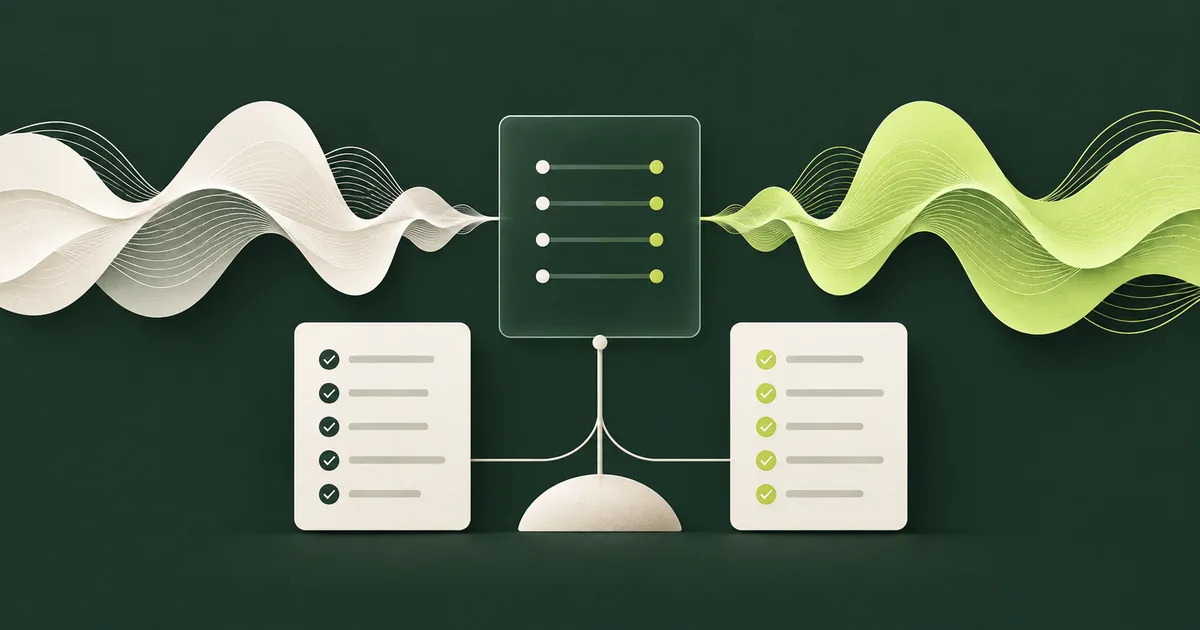
AI call evaluation assesses a conversation against defined criteria and turns the findings into review, coaching or workflow decisions. A useful evaluation explains what happened, which evidence supports the result and what needs attention next.
For a BPO or mid-sized call center, that means more than transcribing recordings. The evaluator needs the right client policy, call purpose and outcome records. Human agents and AI callers can share quality standards, while requiring different checks and improvement methods.
What AI Call Evaluation Includes
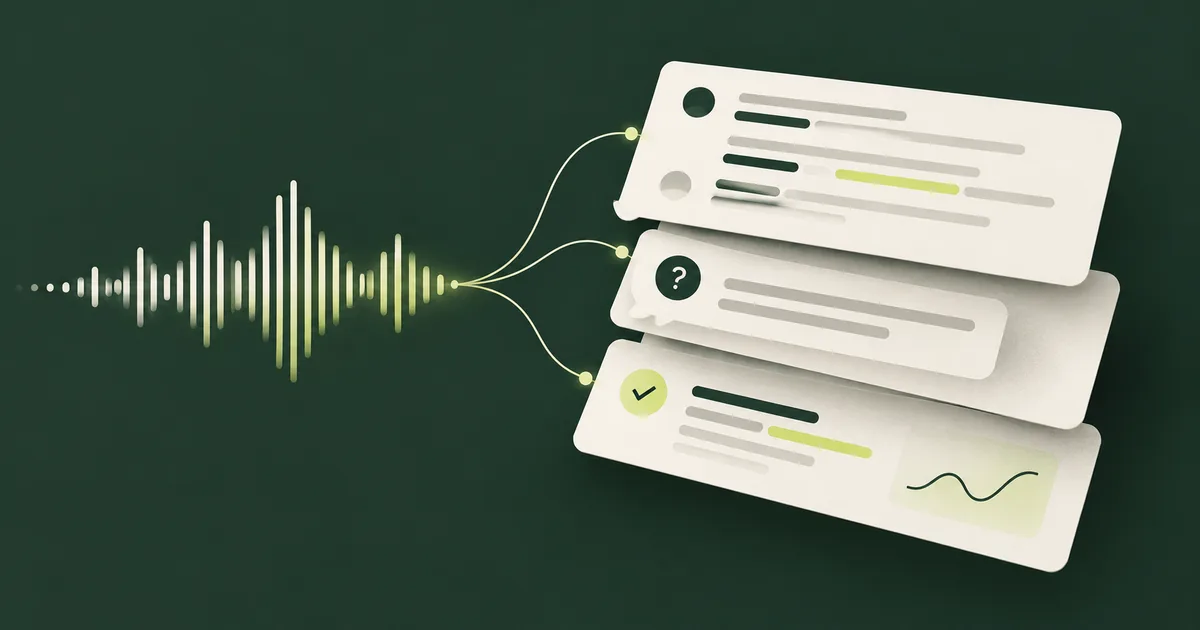
Start with three outputs. A summary describes the conversation. A scorecard judges specific criteria. An outcome record shows what the relevant business system confirmed. These outputs should be connected, but none can stand in for the others.
An accurate summary may still omit a required criterion. A high score may still accompany a failed booking. A completed CRM update may still contain information the customer never supplied.
Define the evaluation around the job of the call: qualifying a prospect, answering a support question, completing an authorized action or handing off to a person. Then decide which evidence each judgment requires.
From Audio to Evidence
Where recording is permitted and available, speech recognition turns audio into text. Speaker labels and timestamps help reviewers find the relevant moment. Check names, amounts, negations and required wording because transcription errors in those details can change the result.
Speech recognition is one component of the pipeline, not a guarantee of end-to-end accuracy. Research such as Radford and colleagues' speech-recognition study provides technical background; deployment quality still needs testing on representative calls.
Attach the policy version, routing context and any action receipts to the same call identifier. A missing recording or failed transcript should remain visible in the coverage report rather than disappearing from the denominator.
Language signals and their limits
Topic and entity analysis can identify a product, stated need or possible objection. Treat inferred intent as an interpretation that can be challenged. A customer asking about price is not necessarily ready to buy.
Text sentiment estimates the attitude expressed in words; it is not a direct measurement of the customer's emotion. Audio timing, pauses and overlaps require appropriate media or timestamp evidence. The technical call-analysis guide separates these inputs.
Design a Scorecard Around Observable Behavior
Replace broad judgments such as “built rapport” with criteria that a reviewer can explain. Did the agent acknowledge the request accurately? Did the answer match approved information? Was the next step confirmed?
| Criterion | Useful evidence | Important limit |
|---|---|---|
| Discovery | Customer need and relevant clarification | A fixed question count does not prove understanding |
| Product accuracy | Statement and applicable policy | A plausible answer may still be wrong |
| Required procedure | Correctly timed step and supporting record | Missing evidence may prevent assessment |
| Next step | Customer agreement and action result | Spoken intention does not prove completion |
| Support resolution | Correct action and defined follow-up evidence | Positive sentiment does not prove resolution |
Use pass, partial, fail, not applicable and unable to assess where the rubric needs them. Record the reason for exclusions. Keep critical failures separate from a weighted quality score so strong conversation skills cannot offset an unauthorized action.
See how to build AI QA scorecards for the scoring method and custom evaluation forms for configuration details.
Connect the Finding to the Right Improvement
For human agents, a verified finding can become a focused practice assignment. A supervisor reviews the example, agrees on the expected behavior and checks later calls where that behavior was relevant. Agents should be able to challenge a finding that misses context.
For AI callers, a recurring problem may require a knowledge correction, instruction change or tool fix. Test the proposed change against both failures and previously successful scenarios, approve it, then monitor its rollout. Post-call analysis should not silently rewrite live behavior.
Keep these paths distinct in reporting. A completed coaching assignment and an approved AI release are different events, even when they address the same customer problem.
Implement in a Narrow Pilot
Begin with one client, one workflow and an agreed rubric. Establish who owns policy, integration, review and follow-up. Confirm that the evidence can be accessed and retained appropriately before connecting production data.
- Gather representative calls, including failures and ambiguous cases.
- Have reviewers apply the rubric independently and resolve disagreements.
- Compare automated findings with those reviewed decisions.
- Inspect false flags, missed issues and unassessable criteria separately.
- Test a specific coaching or workflow change.
- Expand only when the results and operating workload are understood.
Do not calibrate solely on easy calls or the same small set used to tune the system. Keep a separate check set and retest when the relevant policy or evaluation configuration changes.
Measure Coverage, Quality and Outcomes Separately
Coverage shows how many eligible calls reached each stage and how much evidence was assessable. Evaluation quality shows whether findings agree with reviewed evidence. Outcomes show whether the call achieved the intended business task.
A useful dashboard includes all three. It should also expose backlog, failed processing and the time needed for human review. The coverage guide explains why “all calls processed” does not mean “all calls fully understood.”
For sales, distinguish qualified leads, confirmed meetings, attended meetings and won deals. For support, define what counts as resolution and the period in which recontacts are checked. Avoid averaging incompatible client campaigns into a single performance claim.
Common Pilot Problems
If reviewers disagree, clarify the criterion before changing the model. If evidence is missing, fix ingestion or record the limitation. If the AI's recommended response contradicts policy, correct the source and test the revised behavior.
When scores improve but business results do not, inspect the rubric and the outcome definition. The team may be optimizing a checklist that does not capture the actual task. A quality program should make those mismatches visible.
Prepare a Workflow Review
Bring a rubric, a permitted sample call and a definition of the desired outcome to a TrackAgent call QA discussion. Ask how evidence, reviewer correction and follow-up would work for that scope, including the integrations that must be demonstrated.
Frequently Asked Questions
Does AI evaluation replace human review?
It can organize evidence and propose findings at scale. Calibration, disputed cases and consequential judgments still need accountable oversight.
What is the best first metric?
Choose a verified outcome and one quality criterion related to it, then track coverage alongside both. A score without an evidence denominator is difficult to interpret.